As individuals increasingly seek holistic approaches to health, traditional therapies like Unani Medicine and Wet Cupping Therapy (Hijama) are gaining attention. Both methods offer unique perspectives on wellness and healing, yet they operate on different principles. This article delves into what each therapy entails, their overlaps, distinctions, and how to choose the right approach for your needs.
What is Unani Medicine?
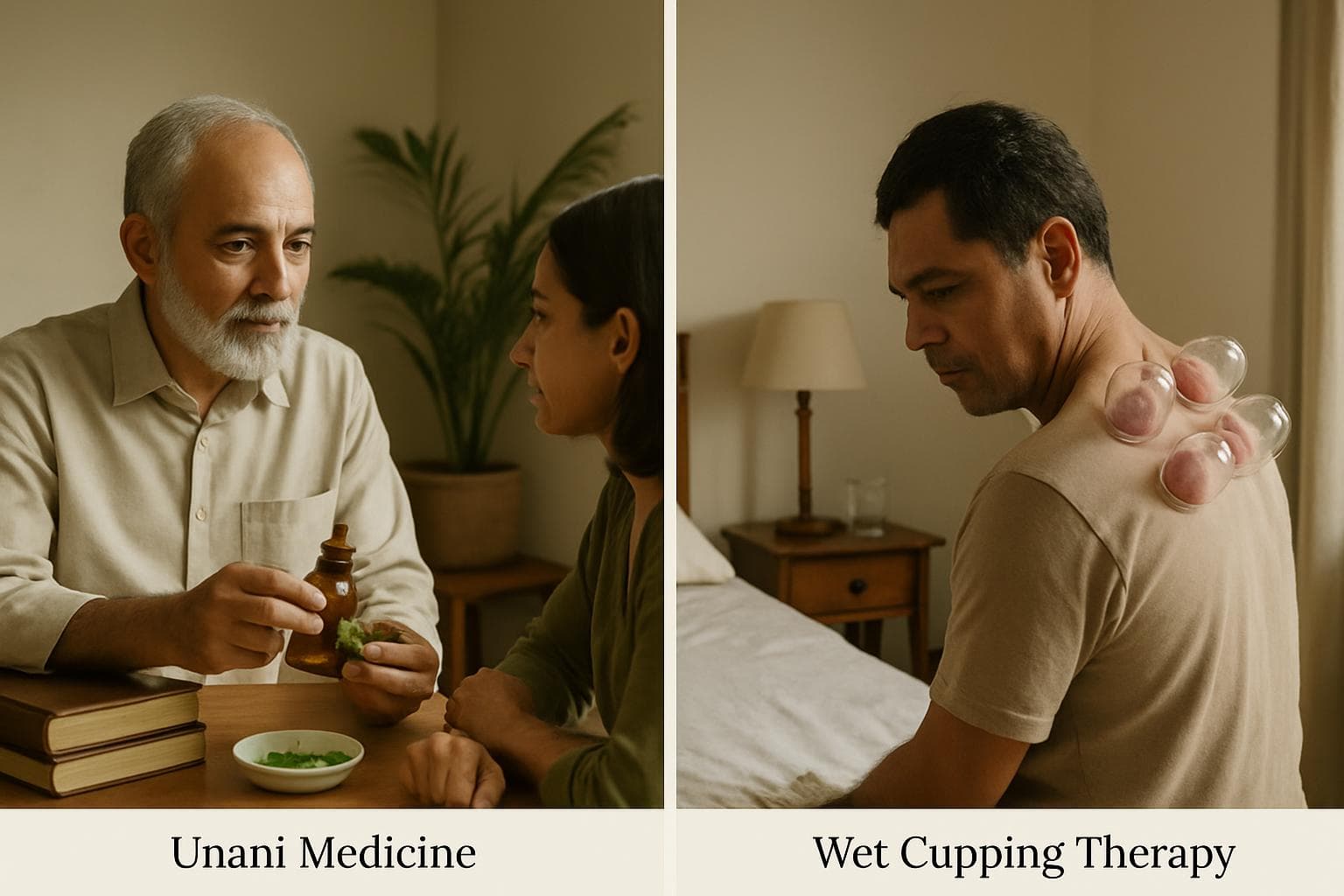
Unani Medicine is a holistic health system that originated in ancient Greece and was further developed in the Middle East. It is based on the concept of balancing bodily humors—blood, phlegm, yellow bile, and black bile. Practitioners utilize a combination of herbal remedies, dietary recommendations, and lifestyle changes to promote health and treat illness.
What is Wet Cupping Therapy (Hijama)?
Wet Cupping Therapy, or Hijama, is a traditional practice that involves creating a vacuum on the skin using cups and then making small incisions to draw out a small amount of blood. This method aims to remove toxins from the body, enhance circulation, and alleviate pain. Wet cupping is often used for conditions such as migraines, muscle pain, and fatigue.
Comparing Unani Medicine and Wet Cupping Therapy
While both Unani Medicine and Hijama focus on improving health through natural means, they differ significantly in their methodologies and applications.
- Philosophy: Unani Medicine emphasizes balance among the body's humors, while Hijama focuses on detoxification and improving blood flow.
- Approach: Unani incorporates various treatments—herbs, diet, and lifestyle—while Hijama is specifically a physical therapy technique.
- Conditions Treated: Unani may address a range of chronic and acute conditions, whereas Hijama is often sought for pain relief and detoxification.
Both therapies can complement each other; for instance, someone receiving Unani treatment may benefit from the detoxifying effects of Hijama. However, it is essential to recognize individual health needs and consult a qualified practitioner.
Who Can Benefit from Each Therapy?
Unani Medicine may be suitable for individuals dealing with chronic conditions, digestive issues, or those seeking a holistic approach to health. On the other hand, Wet Cupping Therapy may appeal to those looking for immediate relief from pain or fatigue, especially athletes or individuals with physically demanding lifestyles.
How to Decide Which Therapy to Explore First
Choosing between Unani Medicine and Wet Cupping Therapy can depend on several factors:
- Health Goals: Consider whether you are seeking long-term health management (Unani) or immediate relief (Hijama).
- Specific Symptoms: Assess your symptoms; if they relate to muscle pain or tension, Hijama might be more beneficial initially.
- Consultation: It’s advisable to consult a healthcare professional familiar with both therapies to determine the best path forward.
In conclusion, both Unani Medicine and Wet Cupping Therapy offer valuable insights and methods for improving health and wellness. By understanding their unique attributes, individuals can make informed decisions tailored to their health journeys. Always consult a qualified professional when symptoms persist or worsen, to ensure safe and effective care.